本文主要从JDK 11源码角度分析 OutputStream。 @anarkh
OutputStream 类实现关系
OutputStream是输出字节流,具体的实现类层次结构如下:
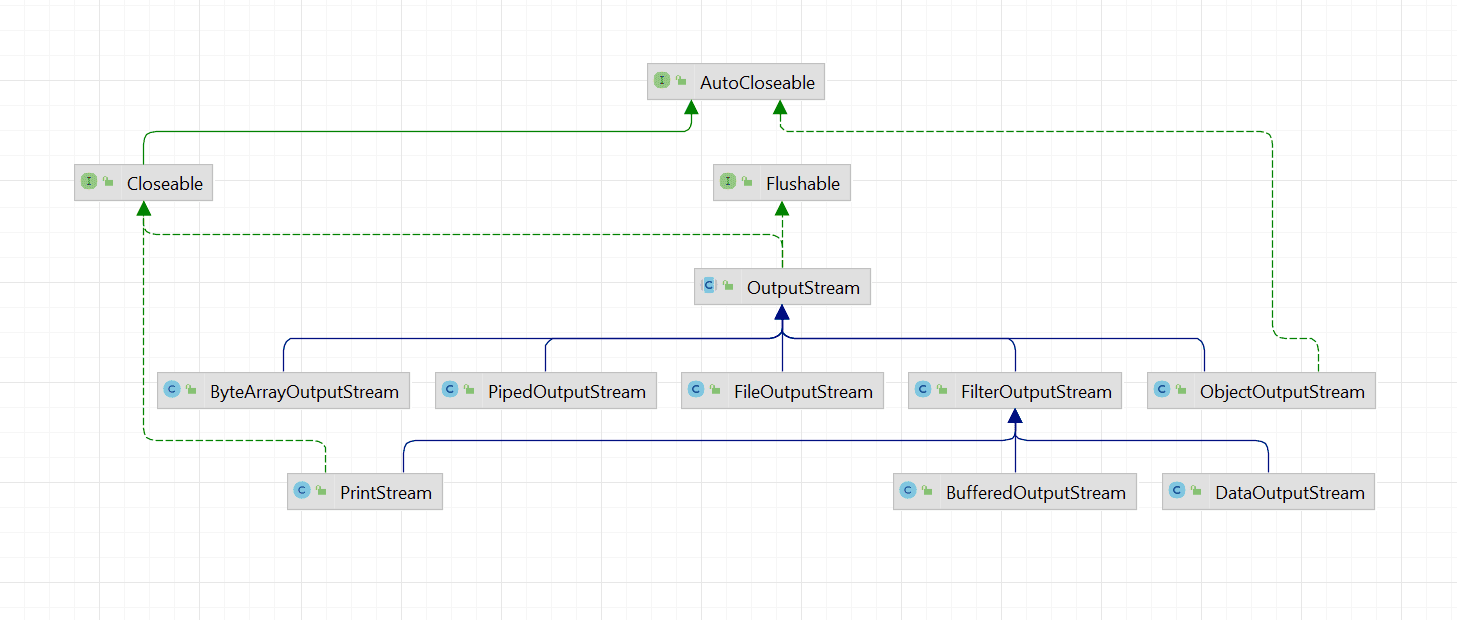
OutputStream 抽象类
OutputStream 类重要方法设计如下:
java
public abstract void write(int b)


public void write(byte b[])


public void write(byte b[], int off, int len)


public void flush()


public void close()源码实现
梳理部分OutputStream及其实现类的源码分析。
OutputStream
OutputStream抽象类源码如下:
java
public abstract class OutputStream implements Closeable, Flushable {


    public static OutputStream nullOutputStream() {
        return new OutputStream() {
            private volatile boolean closed;

            private void ensureOpen() throws IOException {
                if (closed) {
                    throw new IOException("Stream closed");
                }
            }

            @Override
            public void write(int b) throws IOException {
                ensureOpen();
            }

            @Override
            public void write(byte b[], int off, int len) throws IOException {
                Objects.checkFromIndexSize(off, len, b.length);
                ensureOpen();
            }

            @Override
            public void close() {
                closed = true;
            }
        };
    }


    public abstract void write(int b) throws IOException;


    public void write(byte b[]) throws IOException {
        write(b, 0, b.length);
    }


    public void write(byte b[], int off, int len) throws IOException {

        Objects.checkFromIndexSize(off, len, b.length);

        for (int i = 0 ; i < len ; i++) {
            write(b[off + i]);
        }
    }


    public void flush() throws IOException {
    }


    public void close() throws IOException {
    }

}补充下JDK11为什么会增加nullOutputStream方法的设计?即空对象模式
- 空对象模式
举个例子:
java
public class MyParser implements Parser {
  private static Action NO_ACTION = new Action() {
    public void doSomething() {  }
  };

  public Action findAction(String userInput) {

    if (  ) {
      return NO_ACTION;
    }
  }
}然后便可以始终可以这么调用,而不用再判断空了
java
ParserFactory.getParser().findAction(someInput).doSomething();FilterOutputStream
FilterOutputStream 源码如下
java
public class FilterOutputStream extends OutputStream {


    protected OutputStream out;


    private volatile boolean closed;


    private final Object closeLock = new Object();


    public FilterOutputStream(OutputStream out) {
        this.out = out;
    }


    @Override
    public void write(int b) throws IOException {
        out.write(b);
    }


    @Override
    public void write(byte b[]) throws IOException {
        write(b, 0, b.length);
    }


    @Override
    public void write(byte b[], int off, int len) throws IOException {
        if ((off | len | (b.length - (len + off)) | (off + len)) < 0)
            throw new IndexOutOfBoundsException();

        for (int i = 0 ; i < len ; i++) {
            write(b[off + i]);
        }
    }


    @Override
    public void flush() throws IOException {
        out.flush();
    }


    @Override
    public void close() throws IOException {

        if (closed) {
            return;
        }

        synchronized (closeLock) {
            if (closed) {
                return;
            }
            closed = true;
        }


        Throwable flushException = null;
        try {
            flush();
        } catch (Throwable e) {
            flushException = e;
            throw e;
        } finally {
            if (flushException == null) {
                out.close();
            } else {
                try {
                    out.close();
                } catch (Throwable closeException) {

                   if ((flushException instanceof ThreadDeath) &&
                       !(closeException instanceof ThreadDeath)) {
                       flushException.addSuppressed(closeException);
                       throw (ThreadDeath) flushException;
                   }

                    if (flushException != closeException) {
                        closeException.addSuppressed(flushException);
                    }

                    throw closeException;
                }
            }
        }
    }
}@anarkh: 对比下JDK8中,close方法是没有加锁处理的。这种情况下你可以看JDK8源码中,直接利用java7的try with resources方式,优雅的调用flush方法后对out进行关闭。
java
public void close() throws IOException {
    try (OutputStream ostream = out) {
        flush();
    }
}ByteArrayOutputStream
ByteArrayOutputStream 源码如下
java
public class ByteArrayOutputStream extends OutputStream {


    protected byte buf[];


    protected int count;


    public ByteArrayOutputStream() {
        this(32);
    }


    public ByteArrayOutputStream(int size) {
        if (size < 0) {
            throw new IllegalArgumentException("Negative initial size: "
                                               + size);
        }
        buf = new byte[size];
    }


    private void ensureCapacity(int minCapacity) {

        if (minCapacity - buf.length > 0)
            grow(minCapacity);
    }


    private static final int MAX_ARRAY_SIZE = Integer.MAX_VALUE - 8;


    private void grow(int minCapacity) {

        int oldCapacity = buf.length;
        int newCapacity = oldCapacity << 1;
        if (newCapacity - minCapacity < 0)
            newCapacity = minCapacity;
        if (newCapacity - MAX_ARRAY_SIZE > 0)
            newCapacity = hugeCapacity(minCapacity);
        buf = Arrays.copyOf(buf, newCapacity);
    }

    private static int hugeCapacity(int minCapacity) {
        if (minCapacity < 0)
            throw new OutOfMemoryError();
        return (minCapacity > MAX_ARRAY_SIZE) ?
            Integer.MAX_VALUE :
            MAX_ARRAY_SIZE;
    }


    public synchronized void write(int b) {
        ensureCapacity(count + 1);
        buf[count] = (byte) b;
        count += 1;
    }


    public synchronized void write(byte b[], int off, int len) {
        Objects.checkFromIndexSize(off, len, b.length);
        ensureCapacity(count + len);
        System.arraycopy(b, off, buf, count, len);
        count += len;
    }

    public void writeBytes(byte b[]) {
        write(b, 0, b.length);
    }

    public synchronized void writeTo(OutputStream out) throws IOException {
        out.write(buf, 0, count);
    }


    public synchronized void reset() {
        count = 0;
    }


    public synchronized byte[] toByteArray() {
        return Arrays.copyOf(buf, count);
    }


    public synchronized int size() {
        return count;
    }


    public synchronized String toString() {
        return new String(buf, 0, count);
    }


    public synchronized String toString(String charsetName)
        throws UnsupportedEncodingException
    {
        return new String(buf, 0, count, charsetName);
    }

    public synchronized String toString(Charset charset) {
        return new String(buf, 0, count, charset);
    }


    @Deprecated
    public synchronized String toString(int hibyte) {
        return new String(buf, hibyte, 0, count);
    }


    public void close() throws IOException {
    }

}BufferedOutputStream
BufferedOutputStream 源码如下
java
public class BufferedOutputStream extends FilterOutputStream {


    protected byte buf[];


    protected int count;


    public BufferedOutputStream(OutputStream out) {
        this(out, 8192);
    }

    public BufferedOutputStream(OutputStream out, int size) {
        super(out);
        if (size <= 0) {
            throw new IllegalArgumentException("Buffer size <= 0");
        }
        buf = new byte[size];
    }


    private void flushBuffer() throws IOException {
        if (count > 0) {
            out.write(buf, 0, count);
            count = 0;
        }
    }


    @Override
    public synchronized void write(int b) throws IOException {

        if (count >= buf.length) {
            flushBuffer();
        }
        buf[count++] = (byte)b;
    }


    @Override
    public synchronized void write(byte b[], int off, int len) throws IOException {
        if (len >= buf.length) {

            flushBuffer();
            out.write(b, off, len);
            return;
        }
        if (len > buf.length - count) {
            flushBuffer();
        }
        System.arraycopy(b, off, buf, count, len);
        count += len;
    }


    @Override
    public synchronized void flush() throws IOException {
        flushBuffer();
        out.flush();
    }
}参考文章
- JDK 11